How to Rank Your Website in Delhi
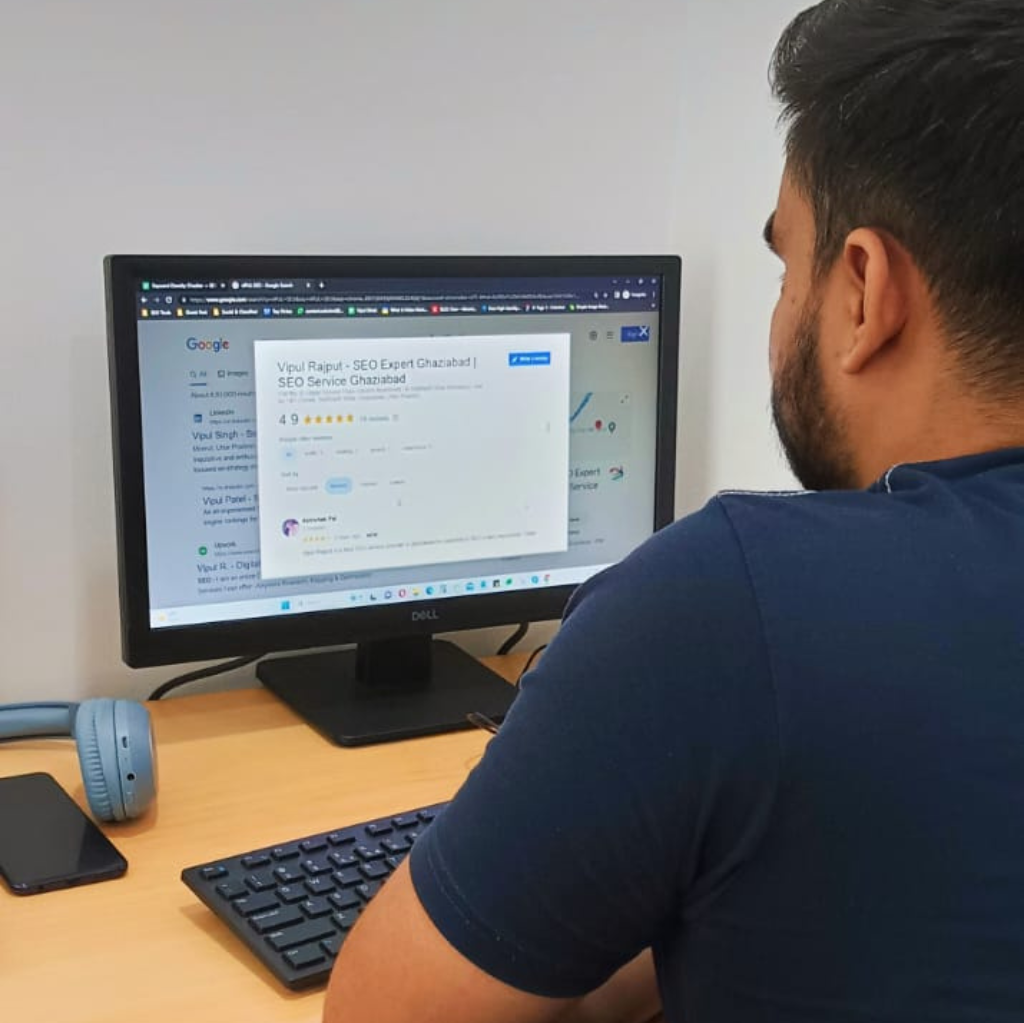
As a SEO expert in Delhi that is exactly what Vipul Rajput is, and this guide reflects 8+ years of ground-level experience working across 100+ real client projects in one of Asia's most saturated digital battlegrounds. Delhi is not a forgiving market. Thousands of businesses launch websites every single month, each one hoping to appear on Google's first page, and most of them disappear into irrelevance within a year because they followed generic advice written by people who have never actually ranked a competitive Delhi keyword. This guide is different. Every strategy shared here has been tested, refined, and proven inside actual Delhi campaigns by someone who also works as an SEO freelancer in Delhi and advises brands as an SEO consultant in Delhi who understands this city's search landscape from the inside out.
What Makes Delhi Different From Every Other Indian Market
Most SEO guides treat India as a single homogeneous market. That is their first mistake. Delhi operates differently from Mumbai, Bangalore, or Chennai not just geographically but behaviourally. Delhi's searchers are impatient, comparison-driven, and deeply price-conscious. They search in English, in Hindi, and increasingly in a fluid mix of both. They switch between devices constantly. They trust reviews from people they relate to over polished brand messaging.
The competitive density here is unlike anything else in India. In a city where three competing dental clinics might exist on a single street in Rajouri Garden, the one that ranks on Google's first page captures 70% of digital enquiries. The other two fight over scraps. That is the commercial reality of SEO in Delhi and it is why a half-hearted, templated approach simply does not work here.
What separates businesses that consistently rank from those that perpetually struggle comes down to one thing: intentional strategy executed with discipline. Not tricks. Not shortcuts. Not bulk backlinks purchased from a Fiverr seller. A structured, layered approach that addresses every dimension of how Google evaluates and ranks websites in 2025.
Pillar 1 Technical SEO: Getting Your House in Order Before Anything Else
There is a mistake I see repeatedly when I take on new clients as an SEO freelancer in Delhi they have invested heavily in content and social media, but their website is fundamentally broken underneath the surface. Pages that cannot be crawled. Duplicate content diluting ranking signals. JavaScript rendering blocking search engines from seeing what users see. Load times that would frustrate someone on a broadband connection, let alone a mobile user in Uttam Nagar on a 4G network.
Technical SEO is not glamorous. It does not produce the kind of visible output that business owners can easily point to. But it is the difference between a website that ranks and one that Google simply ignores regardless of how much content gets published on it.
What a thorough technical SEO foundation looks like in practice:
- Core Web Vitals compliance: Google's page experience signals Largest Contentful Paint, Cumulative Layout Shift, and Interaction to Next Paint directly influence rankings. A Delhi retail website I worked on saw a 31% jump in organic sessions within six weeks simply by optimising their LCP from 5.8 seconds to 2.1 seconds. No new content. No new links. Just speed.
- Mobile-first architecture: Delhi runs on mobile. If your website delivers a degraded experience on a mid-range Android device which represents the majority of your actual audience you are losing both rankings and customers simultaneously.
- Crawl budget management: Large websites with thousands of pages need to ensure Google's crawl budget is spent on valuable pages, not expired product listings, thin filter pages, or internal search results.
- Canonical strategy: Without clear canonical signals, Google may split ranking authority across multiple versions of the same page, diluting the strength of each one individually.
- Schema markup implementation: Structured data does not directly boost rankings, but it earns rich results star ratings, FAQ dropdowns, breadcrumbs that increase click-through rates dramatically. Higher CTR signals to Google that users prefer your result, which feeds back into ranking improvements over time.
- Log file analysis: Understanding exactly how Googlebot crawls your website reveals problems that no standard audit tool will surface. It is an advanced step, but one that consistently uncovers hidden ranking blockers.
Pillar 2 On-Page SEO: Building Pages That Deserve to Rank
Ranking a page on Google is fundamentally an act of convincing an algorithm and the humans behind it that your page is the single most useful, trustworthy, and relevant result for a given search query. That conviction comes from on-page SEO executed with genuine care and expertise.
Keyword research is where this begins, but not keyword research as most people practice it. Pulling a list of high-volume terms and scattering them across a page is not strategy it is noise. Real keyword research for a Delhi market requires understanding the full search journey your potential customer takes. What do they search first when they are just becoming aware of a problem? What do they search when they are comparing options? What exact phrase do they type when they are ready to spend money? Each stage requires different content, different page structure, and different calls to action.
As an SEO consultant in Delhi who has mapped keyword journeys across industries from real estate to healthcare to B2B software, I can say with certainty that most businesses optimise only for the final transactional query and completely ignore the earlier stages where trust is built and brand preference is formed. By the time a user types "hire SEO agency Delhi," they have already made up their mind about which type of provider they trust. If your content was not part of their earlier research journey, you are competing for a customer who has already mentally eliminated you.
On-page elements that move rankings in Delhi's competitive environment:
- Title tag precision: Your title tag is the single most important on-page ranking signal. It must contain your primary keyword close to the beginning, read naturally to human eyes, and differentiate your page from the nine other results sharing the same page.
- Content depth over content length: A 3,000-word page that genuinely answers every question a searcher might have will outrank a 5,000-word page padded with repetition. Depth means covering subtopics, addressing objections, providing examples, and connecting ideas not inflating word count.
- Semantic keyword coverage: Google's natural language processing is sophisticated enough to understand that a page about "dental implants in Delhi" should also mention costs, recovery time, clinics, alternatives, and aftercare even if none of those exact phrases appear in the target keyword list.
- Internal linking with intent: Every internal link is a recommendation. Link to pages that logically continue the reader's journey, use anchor text that describes the destination accurately, and build a site architecture where your most important pages receive the most internal link equity.
- E-E-A-T signals: Experience, Expertise, Authoritativeness, and Trustworthiness are the framework Google uses to evaluate content quality. Author credentials, first-person case examples, original data, and transparent business information all contribute to stronger E-E-A-T and stronger rankings.
Pillar 3 Local SEO: Owning Delhi Neighbourhood by Neighbourhood
Something I have learned working as an SEO expert in Delhi across hundreds of local business campaigns is that Delhi does not search as a single city it searches as dozens of distinct neighbour-hoods, each with its own commercial identity and search behaviour. Someone in Mayur Vihar searches differently from someone in Vasant Vihar. A query typed in Karol Bagh carries different competitive context than the same query typed in Cyber City Gurgaon.
Local SEO is the discipline of making your business visible and credible to searchers in your specific geographic target area. It operates through a different set of signals than standard organic SEO and mastering it requires understanding how Google's local algorithm weighs proximity, relevance, and prominence simultaneously.
Building local SEO authority in Delhi's hyper-competitive market:
- Google Business Profile as a living asset: Most businesses create a GBP listing and abandon it. Businesses that rank in Delhi's local pack treat their GBP as an active channel posting weekly updates, responding to every review within 24 hours, adding new photos monthly, and using the Q&A section to address common customer questions proactively.
- Review velocity and sentiment: The quantity, recency, and sentiment of your Google reviews collectively influence your local pack ranking. A business with 200 reviews averaging 4.2 stars will typically outrank a business with 50 reviews averaging 4.9 stars for competitive local queries in Delhi.
- Localised landing pages: If you serve multiple Delhi areas, each area deserves its own dedicated page with genuinely localised content not a copy-paste template with the neighbourhood name swapped out. Google is sophisticated enough to identify thin localised pages, and they rarely rank.
- NAP consistency across the Indian web: Your business Name, Address, and Phone number must be identical across every online directory Justdial, Sulekha, IndiaMart, Yellow Pages India, and industry-specific platforms. Even minor inconsistencies like "Pvt Ltd" versus "Private Limited" can fragment your local authority signal.
- Local content that actually serves the community: A plumbing company in Dwarka that publishes a guide on "Why Water Pressure Drops in High-Rise Apartments in West Delhi" is building local topical relevance that a generic plumbing website cannot compete with.
Pillar 4 Off-Page SEO: Earning the Authority That Cannot Be Faked
Backlinks remain one of Google's most powerful ranking signals not because the algorithm is outdated, but because a genuine editorial link from a credible source is still one of the hardest things to manufacture artificially at scale. When a respected Indian business publication links to your website, they are putting their own credibility on the line. Google interprets that signal as meaningful precisely because it is hard to fake.
The SEO services in Delhi has matured considerably. The era of bulk directory submissions producing ranking results ended years ago. What works today is a combination of genuine digital PR, strategic content partnerships, and the kind of original thought leadership that makes other websites want to reference your work.
Building real backlink authority as a Delhi business requires patience, creativity, and a long-term mindset. Guest contributions to respected Indian industry platforms, original research that journalists and bloggers cite in their own writing, partnerships with complementary non-competing businesses that result in natural cross-referencing, and consistent brand mention monitoring that converts unlinked mentions into actual backlinks these are the strategies that build durable authority.
What must be categorically avoided is the temptation of paid link schemes. Beyond the ethical dimension, the practical risk is severe. Google's spam detection has become remarkably sophisticated at identifying unnatural link patterns, and a manual penalty for link spam can remove a website from search results for months. I have spent considerable time over my career helping businesses recover from exactly these situations and the recovery process is always more painful, more expensive, and more time-consuming than simply building authority correctly from the beginning would have been.
Pillar 5 Content Strategy: Building Topical Authority That Compounds Over Time
The most underappreciated SEO asset for Delhi businesses is a thoughtfully structured content strategy. Not a blog that publishes one generic post per month. A deliberate, keyword-mapped content ecosystem that positions your website as the most comprehensive and trustworthy resource in your industry for Delhi's market.
Topical authority works on a compounding principle. When Google recognises that your website covers a subject area with genuine depth and breadth addressing the full range of questions, subtopics, and search intents within your niche it begins to extend ranking trust to new pages you publish, even before those pages have accumulated backlinks. This compounding effect is one of the most powerful long-term advantages in SEO, and it is almost entirely ignored by businesses that treat content as an afterthought.
Content formats that build authority and drive rankings in Delhi's market:
- Comprehensive resource guides that answer every significant question within a topic cluster, positioning your website as the reference point for your industry in Delhi
- Data-driven original research using your own client data, industry surveys, or publicly available datasets reanalysed through a Delhi-specific lens content that other websites will cite and link to naturally
- Transparent case studies showcasing real client results with specific numbers, timelines, and methodologies the kind of content that builds trust faster than any amount of promotional copy
- Comparison and decision-support content that helps Delhi users evaluate their options objectively, which earns trust precisely because it does not feel like a hard sell
- Localised evergreen guides addressing Delhi-specific problems, regulations, market conditions, and consumer concerns that national content cannot address with the same relevance
Realistic Timelines and Honest Expectations
One of the most valuable things I offer clients as an SEO consultant in Delhi is honesty about timelines because unrealistic expectations are the most common reason SEO relationships fail before results have time to materialise.
For brand new domains targeting moderately competitive Delhi keywords, initial ranking movements typically become visible between months three and five. Meaningful traffic growth the kind that generates actual leads or sales generally begins between months five and nine, depending on content output and link acquisition pace.
For established domains with existing authority, the timeline compresses significantly. Technical fixes and content optimisation on an aged domain can produce visible ranking improvements within four to six weeks. This is why domain age and existing authority are valuable assets they do not guarantee rankings, but they give new SEO effort a much faster starting point.
For highly competitive head terms "digital marketing agency Delhi," "real estate company Gurgaon," "chartered accountant Delhi" the honest timeline is twelve to eighteen months of sustained, high-quality effort. Anyone promising first-page rankings for these terms within sixty days is either misleading you or planning to use tactics that will eventually trigger a Google penalty.
Common Strategic Errors That Keep Delhi Websites Invisible
Across 100+ projects, certain mistakes appear so consistently that they deserve direct, unambiguous attention:
- Optimising for keywords nobody actually searches impressive-sounding phrases with zero search volume produce zero traffic regardless of ranking position
- Creating content for search engines instead of humans Google's algorithms have become remarkably good at identifying content written to manipulate rather than inform, and they penalise it accordingly
- Treating SEO as a one-time project rankings are not permanent achievements; they require ongoing maintenance, fresh content, and continuous link building to sustain
- Ignoring the connection between UX and SEO Google uses behavioural signals including bounce rate, time on page, and scroll depth as ranking indicators; a website that frustrates users will not maintain rankings even if its technical and on-page SEO is excellent
- Operating without a measurement framework SEO without defined KPIs, baseline metrics, and regular performance reviews is guesswork dressed up as strategy
Conclusion
As a SEO expert in Delhi these are not just professional labels. They represent 8+ years of working inside Delhi's competitive digital market, solving real ranking problems for real businesses, and developing strategies that produce results that actually matter to the people who invested in them. Ranking a website in Delhi in 2026 demands technical rigour, content depth, local market understanding, and the patience to build authority the right way. There are no shortcuts that survive Google's long memory. There is only disciplined, intelligent execution and the compounding rewards it delivers to businesses willing to commit to it properly.