Local SEO for Delhi Restaurants and Food Businesses
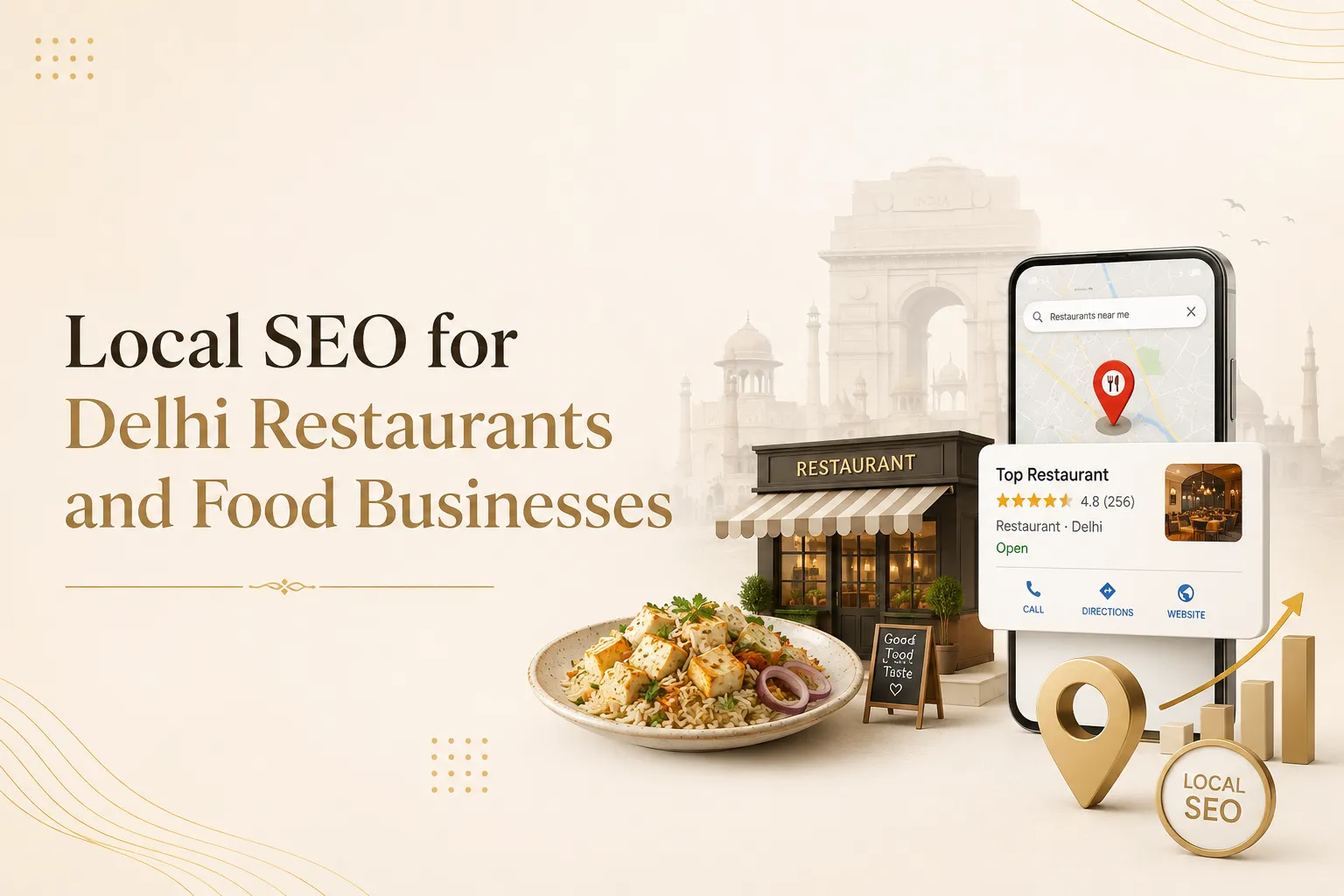
If you run a restaurant, cafe, or cloud kitchen in the capital, local SEO for restaurants Delhi is probably the single most cost-effective marketing lever you're not using properly. Most restaurant owners spend money on food aggregator ads and Instagram boosts, but they ignore the free organic traffic sitting right in front of them on Google Search and Google Maps. When someone types "best butter chicken near me" or "cafe in Hauz Khas Village," Google decides which restaurant shows up first — and that decision is driven almost entirely by how well your online presence is optimized. This guide breaks down exactly what goes into ranking a food business in Delhi's crowded market, without the jargon and without the fluff.
Why Local SEO Matters More for Restaurants Than Any Other Business
Restaurants live and die by proximity searches. Nobody searches for a restaurant three months in advance — they search when they're hungry, within a five-kilometre radius, right now. This makes the "near me" search category incredibly valuable, and it's a category almost entirely controlled by how well your Google Business Profile, website, and citations are set up. Unlike a law firm or a consultancy that can win a client from across the city, a restaurant genuinely competes only with the ten other places within walking or driving distance. That narrows the competition, but it also means small optimization mistakes cost you real, hungry customers every single day.
Delhi is unique because of how neighbourhood-driven the dining culture is. A cafe in Hauz Khas Village competes on a completely different keyword set than a fine-dining place in Connaught Place or a dhaba in Karol Bagh. Generic SEO advice built for a national audience simply doesn't translate well here, which is why area-specific optimization matters so much for anyone doing food business SEO India wide.
Setting Up and Optimizing Your Google Business Profile in Delhi
Your Google Business Profile (GBP) is the single biggest ranking factor for restaurants. It's the panel that shows up on the right side of a Google search or as a pin on Google Maps, and it directly determines whether you appear in the "local pack" — the top three map results that get the overwhelming majority of clicks.
A properly optimized GBP listing goes far beyond just filling in your address and phone number. It requires ongoing attention:
- Category selection: Choose the most specific primary category possible (e.g., "North Indian Restaurant" instead of just "Restaurant"), and add relevant secondary categories like "Cafe" or "Caterer" if applicable.
- Photos uploaded weekly: Fresh, geotagged photos of food, interiors, and staff signal an active business to Google's algorithm.
- Menu with prices: A fully filled menu section, ideally linked or manually added, keeps users on your profile longer and reduces bounce back to search results.
- Q&A section monitored: Answer every question publicly, since unanswered questions look neglected and hurt trust signals.
- Posts published regularly: Weekly GBP posts about offers, events, or new dishes keep your profile "fresh" in Google's eyes.
- Attributes filled completely: Outdoor seating, dine-in, takeaway, Wi-Fi, and similar attributes affect which filtered searches you show up in.
Restaurants that treat their GBP like a living page — not a one-time setup — consistently outrank competitors who set it up once and forget it.
Menu Schema: The Technical Piece Most Restaurants Skip
Schema markup is structured code added to your website that tells Google exactly what kind of content is on a page. For restaurants, menu schema is particularly powerful because it lets Google display your dishes, prices, and even dietary information directly in rich search results, sometimes with a visual carousel of menu items right on the search page.
Very few restaurant websites in Delhi actually implement this correctly, which creates an opportunity. When your menu is marked up using proper Restaurant and Menu schema types, Google can pull individual dish names into search snippets, show price ranges, and even flag vegetarian or Jain options — all of which increases click-through rate without you spending a rupee extra. Combined with fast page load speed and a mobile-friendly layout, correctly implemented schema often does more for visibility than another few months of content writing alone.
Zomato and Swiggy Aren't Separate From Your SEO — They're Part Of It
A common mistake is treating aggregator platforms and Google SEO as two unrelated marketing channels. In reality, they reinforce each other. Google frequently pulls review counts, ratings, and even menu data from Zomato and Swiggy profiles when building its knowledge panel for a business, meaning an inconsistent name, address, or phone number across these platforms directly confounds your local rankings.
Keeping your business name, address, and phone number (commonly called NAP consistency) identical across your website, Google Business Profile, Zomato, Swiggy, and Justdial isn't optional housekeeping — it's a core ranking factor. Encouraging customers to leave reviews on both Zomato and Google, rather than just one, also builds a broader trust signal that search engines factor into local rankings. Restaurants that actively sync their presence across all these platforms tend to see meaningfully better visibility than those that only maintain one channel.
Winning Area-Specific Searches: The Delhi Advantage
This is where most generic SEO advice completely misses the mark. Delhi diners don't just search "restaurant Delhi" — they search by neighbourhood, because the city is simply too large to search any other way. Someone looking for a business lunch spot searches "restaurant near Connaught Place," while someone planning a casual evening searches "cafe in Hauz Khas Village." These area-specific searches usually carry far less competition than city-wide terms, making them some of the easiest wins available.
Take a real example: Diggin, the popular all-day cafe with a location in Hauz Khas Village. Its website and Google listing consistently reference the neighbourhood directly — in page titles, in the "about" section, and in photo captions — rather than only mentioning "Delhi" broadly. This kind of hyper-local signalling helps it show up prominently whenever someone searches specifically for a cafe in that neighbourhood, rather than competing in the much broader and more crowded citywide search results. Any restaurant can replicate this approach by creating locality-specific landing page content, using neighbourhood names naturally in headings, and building citations that consistently mention the exact area rather than just "Delhi" as a catch-all.
Restaurants that want to rank across multiple areas — say a chain with outlets in both Connaught Place and Karol Bagh — need separate, unique content for each location page rather than duplicating the same paragraph with just the area name swapped. Google recognizes thin, duplicated location content and rarely rewards it with strong rankings.
Reviews, Citations, and Building Local Trust in Delhi
Beyond the profile and website itself, Google weighs how the wider internet talks about your restaurant. This includes:
- Review volume and recency on Google, Zomato, and Swiggy
- Consistent business listings on directories like Justdial, Sulekha, and Magicpin
- Mentions in local food blogger roundups or "best cafes in [area]" articles
- Backlinks from Delhi-based food publications or lifestyle websites
None of these happen by accident. A steady, month-on-month review generation habit — simply asking satisfied diners to leave a quick review before they leave — compounds significantly over a year and is one of the most underrated ranking tactics available to any food business.
The Complete Local SEO Formula for Delhi Restaurants
Ranking a restaurant well isn't about one big fix — it's the accumulation of a well-maintained Google Business Profile, correctly implemented menu schema, synced aggregator listings, and genuinely locality-specific content. Businesses that try to shortcut this by only fixing one piece, like just the GBP, tend to plateau quickly because the other trust signals are missing. For restaurant-specific local SEO, work with a Delhi SEO expert who understands your market, since neighbour-hood-level competition in this city behaves very differently from broader national SEO strategies.
I'm Vipul Rajput, and over the past 8+ years I've worked on 100+ SEO projects across different industries, including food and hospitality businesses in Delhi NCR, and I hold certifications from SEMrush, HubSpot, and Google Analytics — which is the lens this guide is written through.
If there's one takeaway from this guide, it's that SEO Services in Delhi isn't a single checklist item you complete once. It's an ongoing combination of profile maintenance, technical markup, platform consistency, and hyper-local content that compounds over months. Restaurants that commit to this steadily, rather than chasing quick wins, are the ones that consistently show up when a hungry customer nearby types their next search.