Why Your Medical Practice Is Not Showing in Local Search
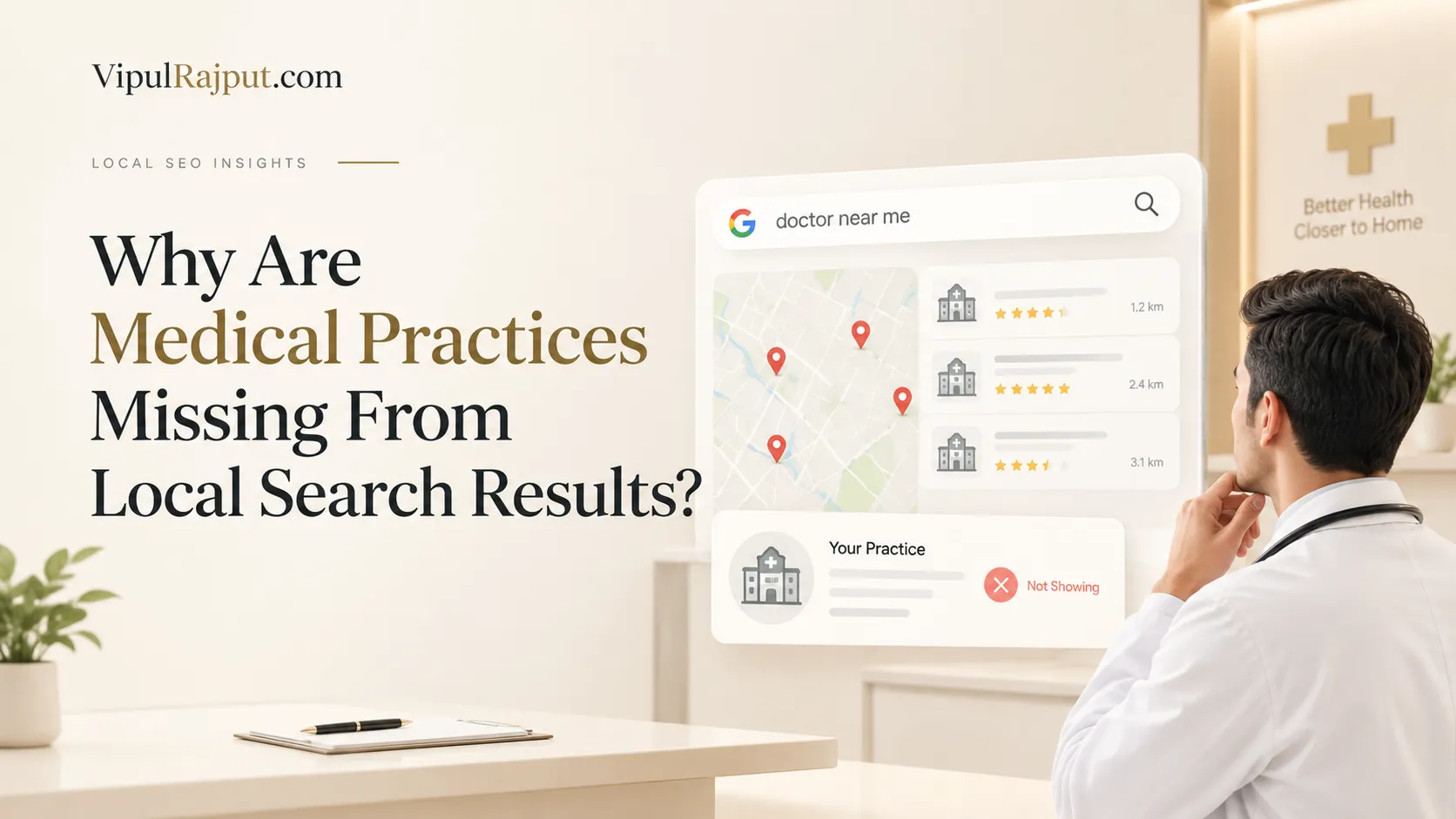
Medical practices can provide excellent treatment and experienced healthcare professionals yet still remain difficult for local patients to find online. This usually happens because search engines do not receive enough clear signals about the practice, its location, services, and relevance to local searches. Medical SEO Services can help identify these visibility gaps and improve the way a healthcare practice appears across search results.
Patients increasingly use search engines to find doctors, clinics, specialists, and healthcare providers near them. If a practice does not appear when patients search for relevant services, it can lose potential appointments to competitors with stronger local visibility. The problem is not always the quality of the medical service. In many cases, the practice simply has weaknesses in its website, local information, technical SEO, content, or overall online presence.
Understanding why this happens is the first step toward building stronger local visibility and helping the right patients find the practice.
Incomplete or Inconsistent Business Information
One of the most common reasons medical practices struggle in local search results is inconsistent business information. Search engines need to understand exactly who the business is, where it operates, and how patients can contact it. When this information is different across the website, business profiles, healthcare directories, and other online platforms, it can create uncertainty.
For example, a clinic may have an old address listed on one directory while its website displays a new location. Another platform may show different opening hours or a different phone number. These small inconsistencies can make it more difficult for search engines to confidently connect all online information to the same medical practice.
Healthcare providers should regularly review their core business details across important platforms. The information should accurately represent the practice and remain updated when changes occur. A clear and consistent online presence makes it easier for patients to contact the practice and helps search engines understand the business correctly.
The most important information to monitor includes:
- Practice name
- Address
- Phone number
- Opening hours
- Website URL
- Available medical services
The Website Does Not Clearly Explain Local Relevance
A professional-looking website does not automatically perform well in local search. Search engines also need to understand which locations the practice serves and which healthcare services are available there. Many medical websites provide general information about their services but do not clearly explain their geographical relevance.
For example, a clinic may describe its treatments in detail but provide very little information about its physical location, service areas, or local patient base. This can make it harder for search engines to connect the practice with relevant searches made by people in nearby locations.
The website should naturally explain where the practice operates and how patients can access its services. This information should not feel forced or repetitive. The purpose is to provide useful context for patients rather than repeatedly inserting city names into every page.
Strong local content can explain the services offered at a specific practice, provide accurate location details, introduce healthcare professionals, and make appointment information easy to access. When these details are clear, both users and search engines can better understand the practice.
Weak Service Pages Can Limit Search Visibility
Many medical practices have websites with only basic service information. A page may mention a treatment or specialty without explaining what the service involves, who provides it, or how patients can take the next step.
Search engines aim to connect users with pages that are relevant to their searches. If a competitor provides more useful and detailed information about the same service, that competitor may have a stronger opportunity to appear in relevant results.
Each important medical service should have enough information to help users understand the purpose of the service and whether it is relevant to their needs. The content should remain accurate and avoid unsupported medical claims. It should also be easy for patients to understand without requiring unnecessary technical knowledge.
A useful service page can naturally include information about:
- The service or treatment offered
- The relevant medical specialty
- What patients can generally expect
- Who provides the service
- How to contact or book an appointment
The focus should remain on patient education and clarity. Search optimization works best when the page is genuinely useful to the person reading it.
Technical SEO Problems Can Prevent Important Pages From Performing
A medical website can have useful content and still struggle because of technical problems. Search engines need to crawl, access, and understand website pages before those pages can perform effectively in search results.
Problems such as broken links, incorrect redirects, duplicate pages, poor internal linking, slow loading times, and indexing issues can affect visibility. In some cases, an important service or location page may not even be properly available to search engines.
Mobile usability is also important because many patients search for healthcare providers using smartphones. If the website is difficult to use on a smaller screen, patients may struggle to find essential information such as services, directions, phone numbers, or appointment options.
A technical review should examine areas such as page accessibility, crawlability, indexing, mobile performance, internal linking, and website speed. The purpose is not simply to achieve technical scores. A strong technical foundation helps both search engines and patients access important information without unnecessary barriers.
The Practice Has Limited Online Trust Signals
Healthcare is a trust-sensitive industry. Before contacting a medical practice, many patients want to understand who provides the care and what experience or qualifications the healthcare professionals have.
A website that provides limited information about doctors, specialists, or the practice itself may make it difficult for patients to build confidence. The same issue can affect how clearly search engines understand the people and organization behind the website.
Doctor profiles, professional information, relevant qualifications, and accurate descriptions of services can help create a stronger online presence. The information should always be factual and easy to verify.
Patient reviews can also influence how people evaluate a medical practice. A practice with very limited recent feedback may appear less active than a competitor with a stronger and more consistent reputation.
However, healthcare providers should approach reviews responsibly and respect patient privacy. The goal should be to build genuine trust rather than simply collect reviews for search visibility.
Competitors May Have Stronger Local Search Signals
Sometimes a medical practice is not completely missing from search results. Instead, it appears below competitors that have developed a stronger local presence.
A competing practice may have more detailed service information, stronger business profiles, clearer location details, more useful website content, and better technical performance. Over time, these improvements can create a stronger overall digital presence.
The solution is not to copy a competitor's website. Every medical practice has different services, specialists, patients, and strengths. Instead, the practice should identify what useful information is missing from its own website and online presence.
An effective local SEO review should consider whether the practice clearly communicates:
- Its services and specialties
- Its location and service areas
- Its healthcare professionals
- Its contact information
- Its appointment process
- Its credibility and professional information
Improving these areas can create a stronger foundation without relying on generic or copied content.
Location Pages That Offer Little Value Can Be a Problem
Some medical websites create separate pages for many cities or neighbourhoods without providing meaningful information for each location. These pages often use almost identical content and only replace the location name.
This approach does not create a strong experience for patients. A person visiting a location page should receive information that helps them understand how the practice is relevant to that particular area.
If a medical practice has a physical location, the website should clearly explain where it is located and how patients can access it. If the practice serves multiple areas, that information should be presented accurately without creating unnecessary pages purely for search engines.
Useful location content can include genuine details about the practice, available services, accessibility, and appointment options. The content should exist because it helps patients, not simply because a location name has search volume.
The Website Content Does Not Match Patient Search Intent
Patients search for healthcare information at different stages of their journey. Some users already know which doctor or specialist they need. Others are trying to understand a service before deciding whether to contact a healthcare provider.
A medical website that only talks about the practice may miss these different needs. Helpful content can explain services, specialties, appointment processes, and other relevant patient questions.
The content should remain focused on information the practice can responsibly provide. Healthcare websites should avoid exaggerated claims, misleading promises, and unnecessary content written only to attract traffic.
A strong content strategy helps connect the practice with relevant patient searches while providing genuine value. The objective should be to make the website more useful, not simply to increase the number of pages.
Poor Internal Linking Can Hide Important Pages
Internal links help users and search engines move through a website. When important pages are disconnected from the rest of the website, they may receive less attention and become harder for visitors to discover.
For example, a valuable service page may exist but have very few internal links pointing to it. Patients may not easily find the page while browsing, and search engines may receive weaker signals about its importance within the website.
A clear website structure should connect relevant pages naturally. A service page can link to related doctor information, appointment pages, educational content, and relevant location information when those connections genuinely help the user.
Good internal linking creates a clearer journey for patients. It also helps search engines understand how different pages and topics are connected.
Medical Practices Need a Patient-Focused Local SEO Strategy
Local search visibility should not focus only on ranking for keywords. A medical practice needs to provide clear information, build trust, and make it easy for the right patients to find the practice and take the next step.
Vipul Rajput SEO company, we create patient-focused strategies that combine technical SEO, local optimization, useful content, website structure, and ongoing performance monitoring. A one-time website update is rarely enough because search competition, patient behaviour, and local search results continue to change.
Our approach is guided by the experience and expertise of an SEO Specialist , ensuring that every part of the strategy is focused on identifying the real reasons behind poor search visibility. Instead of relying on keyword stuffing or short-term tactics, we focus on building a stronger search foundation that can support long-term growth
For medical practices, the right strategy should begin with understanding the current problems. Our team reviews technical issues, weak local signals, content gaps, website structure, and competitor activity to identify the areas that need improvement. With the guidance of an experienced SEO Consultant , we can create a focused strategy that helps medical practices improve their visibility and connect with relevant patients through search.
How Medical Practices Can Improve Their Local Visibility
The most effective approach is to improve the complete online presence rather than focusing on only one ranking factor. Search engines need clear information, while patients need useful and trustworthy answers.
Medical practices can start by reviewing their website and local presence from a patient's perspective. Important information should be easy to find, accurate, and relevant to the services the practice actually provides.
The improvement process should focus on:
- Maintaining accurate practice information
- Improving service and location content
- Strengthening doctor and practice profiles
- Fixing technical SEO problems
- Improving mobile usability
- Creating useful internal links
- Monitoring search visibility and website performance
These improvements work together. A strong website with inaccurate local information can still create problems, while accurate business information alone cannot solve weak content or technical issues.
Why Medical SEO Requires a Focused Approach
Medical websites operate in an industry where trust, accuracy, and user experience are especially important. The strategy should therefore be more thoughtful than simply adding keywords to pages.
A focused approach to Medical SEO can help healthcare practices improve how search engines understand their website and how local patients discover relevant information. This can include reviewing technical issues, improving service pages, strengthening local relevance, and creating a better website journey.
The ultimate objective should be long-term visibility. A practice should aim to attract relevant patients who are genuinely interested in its services rather than chasing unrelated traffic.
Final Thoughts
Medical practices can disappear from local search results for many reasons. Inconsistent business information, weak service pages, technical SEO problems, poor local relevance, limited trust signals, and stronger competitors can all affect visibility.
The most effective solution is to understand the specific gaps affecting the practice and improve them through a structured strategy. Healthcare providers should focus on accurate information, useful content, technical performance, local relevance, and a better patient experience.
A well-planned Medical SEO Services strategy can help medical practices build a stronger foundation for local search visibility. With the right approach, the goal is not simply to rank higher but to make it easier for the right patients to find, understand, and confidently contact the practice.