E-commerce SEO Guide for Delhi Online Stores
Every Delhi online store competes for visibility in one of India's most saturated digital marketplaces. E-commerce SEO for Delhi online stores determines whether a product page ranks on the first page of Google or gets buried under thousands of competitors selling the same category. This guide lays out practical strategies that drive organic traffic, improve conversion rates, and build sustainable rankings for online stores operating across Delhi NCR. You will find keyword research methods, on-page optimization techniques, technical fixes, local SEO tactics, and measurement frameworks built specifically for e-commerce websites. Each section stands on its own, so you can jump directly to the strategy you need without reading the guide from start to finish.
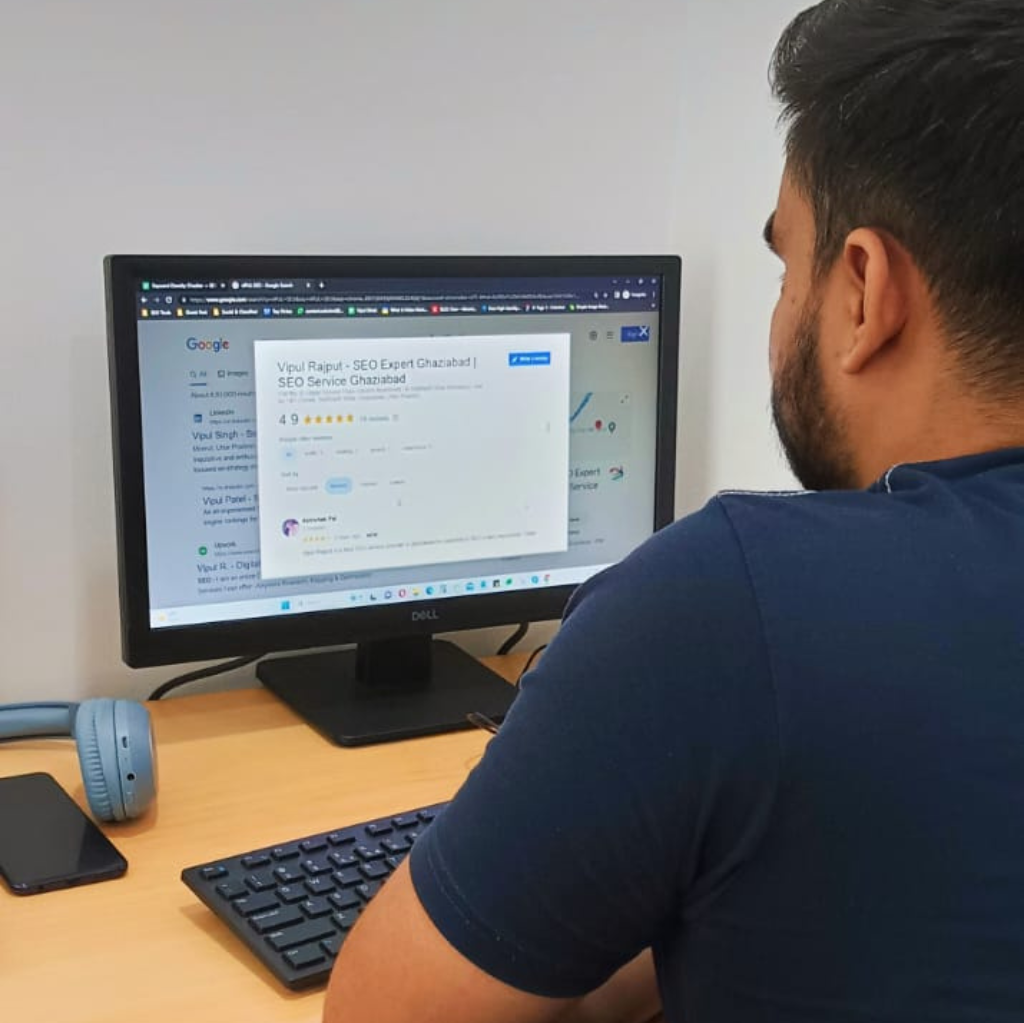
This guide is written by Vipul Rajput, an SEO Freelancer in Delhi with 8+ years of experience managing organic growth for 100+ e-commerce and business websites across fashion, electronics, home decor, and D2C categories. Vipul holds certifications from SEMrush, HubSpot, and Google Analytics, and applies these frameworks in live client campaigns rather than as theoretical concepts. The strategies below reflect what actually moves rankings and revenue for online stores based in Delhi.
Why E-commerce SEO Matters for Delhi Online Stores
Organic search remains the most cost-efficient acquisition channel for online retail. Paid advertising delivers immediate visibility, but the cost per click rises continuously as competitors bid on the same product categories. Search engine optimization builds an asset that keeps generating traffic long after the initial investment, which makes it essential for stores operating on tight margins.
Delhi's e-commerce landscape includes established marketplaces, D2C brands, and thousands of small online sellers, all targeting overlapping keywords. A store that ignores structured optimization loses visibility to competitors who invest in it. Search engines like Google evaluate hundreds of ranking factors, including site speed, content relevance, backlink quality, and user experience signals, before deciding which store appears first for a given query.
A well-executed SEO strategy also improves the buyer journey. Optimized category pages help shoppers find products faster, clear product descriptions reduce return rates, and fast-loading pages lower cart abandonment. SEO, in this sense, is not just a traffic channel it directly influences conversion rate and customer trust.
Sustainable rankings also protect a store from platform dependency. Sellers who rely entirely on marketplace listings or paid social ads remain vulnerable to policy changes, rising commission fees, and algorithm shifts outside their control. A store with its own optimized website and a growing organic footprint owns its customer relationships and retains a higher margin on every sale. This independence becomes especially valuable for Delhi-based brands looking to scale beyond a single sales channel and build long-term equity in their own domain.
Keyword Research for Delhi-Based E-commerce Stores
Keyword research forms the foundation of any e-commerce SEO for Delhi online stores strategy. Generic national keywords carry high competition, so most Delhi stores benefit from a layered approach that mixes broad category terms with location-specific and long-tail variations.
Effective keyword research for an online store should map to different stages of the buying funnel:
- Informational keywords : searches like "best fabric for summer kurtas" that attract early-stage shoppers researching a category
- Commercial investigation keywords : comparison-driven searches such as "top wireless earbuds under 2000" that indicate purchase intent
- Transactional keywords : direct buying terms like "buy running shoes online Delhi" that convert at the highest rate
- Branded keywords : searches containing your store name, which indicate returning or referred customers
- Local intent keywords : terms combining product category with "Delhi," "Delhi NCR," or specific neighborhoods, useful for stores offering same-day delivery or local pickup
Tools such as Google Keyword Planner, SEMrush, and Ahrefs help identify search volume and competition levels for these terms. Delhi sellers should prioritize keywords with realistic competition levels rather than chasing high-volume terms dominated by established marketplaces like Amazon or Flipkart.
On-Page SEO Optimization for Product and Category Pages
On-page optimization directly influences how search engines interpret and rank individual pages. Product pages and category pages carry the highest commercial value on an e-commerce site, so they deserve the most attention during optimization.
Each product page should include a unique title tag, a compelling meta description, and a single H1 heading that reflects the primary keyword for that product. Duplicate content across similar product variants, a common issue for stores selling clothing or accessories in multiple sizes and colors, hurts rankings because search engines struggle to determine which version to index.
Key on-page elements to optimize include:
- Title tags under 60 characters that include the product name and a relevant modifier
- Meta descriptions under 155 characters that encourage clicks without keyword stuffing
- Descriptive alt text for every product image, which also improves accessibility
- Structured data markup (Schema.org Product, Review, and Offer schema) that enables rich snippets in search results
- Internal linking between related products and category pages to distribute page authority
- Unique, benefit-focused product descriptions instead of manufacturer-supplied copy
Category pages need their own optimization layer. A short descriptive paragraph above or below the product grid, combined with a clear H1 and breadcrumb navigation, helps search engines understand the page hierarchy and improves crawl efficiency across the entire catalog.
Faceted navigation, common on category pages that let shoppers filter by size, color, or price, requires careful handling to avoid generating thousands of near-duplicate URLs. Rules governing which filter combinations get indexed, and which get marked with a no-index tag or canonical reference, should be defined early. Getting this balance right is a recurring theme in any SEO services in Delhi online stores project, since even well-written product copy loses its value if crawlers waste their budget on low-value filter URLs instead of core product pages.
Technical SEO Essentials for E-commerce Websites
Technical SEO ensures that search engines can crawl, index, and render an online store correctly. E-commerce sites are structurally complex, with thousands of URLs generated through filters, pagination, and product variants, which makes technical hygiene critical.
Site architecture should follow a logical, shallow structure where any product page is reachable within three clicks from the homepage. A flat structure improves crawl efficiency and helps search engines distribute ranking authority across the catalog more evenly.
Common technical issues that affect Delhi online stores include:
- Duplicate content generated by filter and sorting parameters, which should be managed with canonical tags
- Broken links and outdated redirects from discontinued products, which waste crawl budget
- Missing or misconfigured XML sitemaps that fail to include newly added products
- Slow server response times, especially during high-traffic sales periods
- Unoptimized robots.txt files that accidentally block important pages from indexing
- Poor Core Web Vitals scores caused by unoptimized images and excessive third-party scripts
Platforms such as Shopify, WooCommerce, and Magento each handle these issues differently, so the technical audit process should account for platform-specific limitations. Regular technical audits using Google Search Console and Screaming Frog help catch these issues before they affect rankings.
JavaScript-heavy storefronts introduce an additional layer of complexity. Search engines must render JavaScript before they can read the final page content, and rendering delays sometimes cause important elements such as product prices or availability status to be missed during indexing. Server-side rendering or pre-rendering solutions reduce this risk for stores built on modern JavaScript frameworks. Log file analysis adds another diagnostic layer, showing exactly which pages search engine crawlers visit and how often, which helps prioritize fixes for the pages that matter most to revenue.
Local SEO Strategies for Delhi Online Stores
Local SEO plays a distinct role for e-commerce businesses that maintain a physical presence, offer local delivery, or want to build regional trust signals. Even purely online stores benefit from local optimization because it strengthens relevance for location-based searches and builds domain credibility within a geographic market.
An optimized Google Business Profile remains one of the strongest local ranking signals available to any Delhi-based online store. Consistent business information across directories, combined with location-specific landing pages, reinforces this signal and supports broader e-commerce SEO for Delhi online stores efforts.
Practical local SEO tactics include:
- Claiming and fully completing a Google Business Profile with accurate address, hours, and category information
- Building citations on relevant Indian business directories such as JustDial, Sulekha, and IndiaMART
- Creating location-specific landing pages for stores serving multiple areas within Delhi NCR
- Encouraging verified customer reviews, which influence both local rankings and buyer trust
- Using consistent NAP (Name, Address, Phone number) data across the website and all external listings
Local SEO also supports voice search optimization, since a growing share of local queries now originate from voice assistants that prioritize concise, geographically relevant answers.
Content Marketing and Product Page Optimization
Content marketing extends the reach of an e-commerce store beyond direct product searches. Buying guides, comparison articles, and category-level blog content attract shoppers earlier in their research process and build topical authority that supports rankings for competitive commercial keywords.
A blog section addressing common customer questions sizing guides, material comparisons, care instructions, or gift guides captures informational search traffic that product pages alone cannot reach. This content also creates natural internal linking opportunities toward relevant product and category pages, which strengthens the site's overall link structure.
Product descriptions deserve the same editorial attention as blog content. Generic, manufacturer-supplied descriptions rarely rank well because thousands of other sellers use identical text. Rewriting descriptions to highlight specific use cases, materials, and benefits creates unique content that search engines can differentiate and rank independently.
Seasonal and festival-driven content offers a significant opportunity for Delhi online stores. Search interest spikes predictably around Diwali, wedding season, and end-of-year sales, and stores that publish relevant buying guides or gifting content weeks in advance capture this demand before competitors do. Updating this content year over year, rather than creating new pages each cycle, also consolidates ranking signals on a single, increasingly authoritative page instead of fragmenting them across duplicate seasonal content.
Link Building Strategies for E-commerce Websites
Backlinks remain one of the strongest ranking signals for competitive e-commerce keywords. A Delhi online store competing against national brands needs a deliberate link acquisition strategy rather than relying on organic mentions alone.
Effective link building approaches for e-commerce stores include:
- Guest contributions to relevant lifestyle, fashion, or technology publications with a contextual link back to the store
- Digital PR campaigns around product launches, sustainability initiatives, or unique brand stories
- Partnerships with manufacturers or suppliers who list authorized retailers on their official websites
- Local business directory listings and Delhi-focused business associations
- Influencer and blogger collaborations that include a follow link to specific product pages
Link quality matters more than link quantity. A small number of links from relevant, authoritative domains delivers more ranking value than a large volume of low-quality directory submissions.
Delhi's dense network of wholesale markets, manufacturing hubs, and trade associations also creates unique link opportunities that national brands often overlook. Local chambers of commerce, industry-specific trade bodies, and regional news outlets covering Delhi's retail and startup ecosystem represent realistic, high-relevance link targets. Building these relationships takes longer than submitting to generic directories, but the resulting links carry more topical and geographic relevance, which strengthens overall e-commerce SEO for Delhi online stores performance over time.
Mobile Optimization and Page Speed
Mobile traffic accounts for the majority of e-commerce sessions in India, making mobile optimization a direct ranking and conversion factor rather than an optional enhancement. Google uses mobile-first indexing, meaning the mobile version of a site determines its ranking across all devices. Any store serious about e-commerce SEO for Delhi online stores must treat mobile performance as a core priority, not an afterthought.
Page speed directly affects both rankings and revenue. Every additional second of load time increases the likelihood that a visitor abandons the page before it finishes loading. Compressing product images, enabling browser caching, deferring non-critical JavaScript, and using a content delivery network all contribute to faster load times across mobile networks common in Delhi NCR.
Responsive design, touch-friendly navigation, and simplified checkout flows further reduce friction on mobile devices, where smaller screens amplify any usability issue present on desktop.
A guest checkout option, auto-filled address fields, and multiple regional payment methods including UPI, which dominates online transactions across Delhi NCR reduce the number of steps between product discovery and purchase completion. Every additional form field or mandatory account creation step increases the chance a mobile shopper abandons the transaction before it finishes. Progressive Web App features, such as offline browsing and app-like navigation, offer an additional layer of performance improvement for stores with the development resources to implement them.
Common E-commerce SEO Mistakes to Avoid in Delhi
Many Delhi online stores repeat the same avoidable mistakes that limit their organic growth. Identifying these early prevents wasted effort and protects existing rankings from unnecessary damage.
- Using manufacturer product descriptions without rewriting them for uniqueness
- Ignoring out-of-stock product pages instead of redirecting or repurposing them
- Ranking multiple pages for the same keyword, which splits authority instead of consolidating it
- Neglecting mobile page speed while focusing only on desktop performance
- Skipping structured data markup, which limits eligibility for rich search results
- Building backlinks from irrelevant or low-quality domains purely for volume
Avoiding these mistakes protects the technical and content foundation that every other optimization effort depends on.
Measuring SEO Success: Tools and KPIs
SEO performance should be tracked continuously rather than evaluated only after a campaign concludes. Clear key performance indicators help distinguish genuine progress from short-term fluctuations in search rankings.
Recommended tools and metrics for tracking e-commerce SEO for Delhi online stores include:
- Google Analytics 4 for tracking organic traffic, conversion rate, and revenue by channel
- Google Search Console for monitoring keyword rankings, click-through rate, and indexing issues
- SEMrush or Ahrefs for competitor analysis, backlink tracking, and keyword gap identification
- Core Web Vitals reports for ongoing technical performance monitoring
- Organic revenue and assisted conversions as the ultimate measure of SEO effectiveness, beyond rankings alone
Reviewing these metrics monthly allows a store to adjust its strategy based on actual performance data rather than assumptions.
Structured Data and Rich Results for Product Listings
Structured data helps search engines display richer, more informative results directly on the search page. For e-commerce websites, this markup often determines whether a listing shows a star rating, price, and stock status directly in search results, or appears as a plain blue link with no additional context.
Schema.org markup relevant to online stores includes Product schema, Aggregate-Rating schema, and Breadcrumb schema. Implementing these correctly increases click-through rate because shoppers can compare price and availability before clicking into the site. Google Search Console's Enhancements report flags markup errors, making it a useful ongoing validation tool once structured data has been implemented across the catalog.
Beyond product-level markup, FAQ schema and How To schema can support content pages such as sizing guides or care instructions, giving those pages additional visibility opportunities in relevant searches. Consistent, error-free implementation across the site compounds over time, as more pages become eligible for enhanced search result formats.
Structured data alone does not guarantee a rich result, since Google decides independently which eligible pages actually receive the enhanced format. Treating structured data as one input within a broader e-commerce SEO for Delhi online stores strategy, rather than a standalone fix, sets realistic expectations while still capturing the incremental visibility gains it makes possible.
Choosing the Right SEO Partner in Delhi
Many Delhi online stores reach a point where in-house resources cannot keep pace with the technical and content demands of a growing SEO strategy. At this stage, working with an experienced professional becomes a practical decision rather than an optional upgrade.
A qualified partner should demonstrate a clear process for auditing the existing site, prioritizing fixes based on revenue impact, and reporting progress against measurable KPIs rather than vanity metrics like raw traffic volume. Experience across multiple e-commerce platforms, familiarity with the Delhi market, and a transparent approach to reporting are reasonable criteria to evaluate before starting an engagement.
Pricing structures vary widely across freelancers and agencies, so it helps to request a sample audit or a scoped first engagement before committing to a long-term retainer. A results-driven approach to e-commerce SEO for Delhi online stores, backed by clear reporting and realistic timelines, tends to outperform vague promises of fast rankings, which rarely hold up against how search algorithms actually evaluate e-commerce sites.
Conclusion
Sustainable organic growth for any Delhi-based online retailer depends on consistent execution across keyword research, on-page optimization, technical health, local relevance, content, and link acquisition. No single tactic works in isolation. E-commerce SEO for Delhi online stores succeeds when these elements work together as a connected system rather than isolated tasks handled in silos. Stores that commit to this structured approach, track their progress against clear KPIs, and refine their strategy based on real performance data will build lasting visibility that continues generating qualified traffic well beyond any single campaign or sales season.